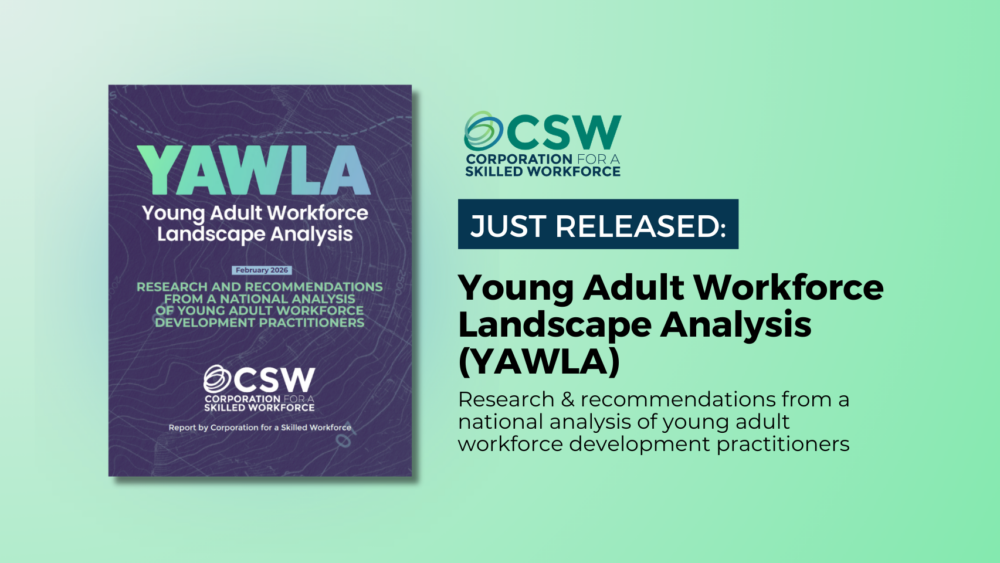

Every workforce development decision requires a “bet” on current labor market conditions and future trends. Without customized, regional, or population-specific data and evidence, these bets rely on perception, intuition, or incomplete information, which can slow momentum, misdirect resources, and reinforce inequities. Labor market information (LMI) is one of the... read more →
May
19
May
04
For years, Michigan’s agriculture and food system has depended on workers, including migrant and seasonal farmworkers, to keep fields productive and supply chains moving. Yet, many food system jobs, including those in production and retail, fall short of what defines a quality job: one that provides family-sustaining wages, access... read more →
Apr
21
April 21, 2026. New York, New York: Corporation for a Skilled Workforce (CSW), with funding from the Annie E. Casey Foundation, is upgrading the Workforce Benchmarking Network (WBN) National Survey platform from a limited use, manual database into a scalable, Salesforce-based learning infrastructure. These changes will drive continuous improvement... read more →
Mar
26
JPMorganChase and Pinkerton Foundation Grants Support Data Capacity and Systems Improvement Across NYC’s Workforce Ecosystem New York, NY — March 26, 2026 — Seventeen New York City workforce development organizations have been selected to participate in the 2026 - 2027 Workforce Benchmarking Network (WBN) NYC Cohort, a citywide initiative designed to strengthen program performance, close equity gaps, and improve long-term economic outcomes for... read more →
Mar
09
Ann Arbor, Michigan, March 9, 2026: Corporation for a Skilled Workforce (CSW), with support from Truist Foundation, is launching the Rural Workforce Academy (RWA), a two-year initiative designed to strengthen workforce organizations serving rural communities across the Southeastern United States. The RWA will equip local leaders and practitioners with... read more →
Feb
17
Across the country, workforce development organizations are hearing a message from young adults that is remarkably consistent—and increasingly difficult to ignore. Young people want work that offers flexibility. They want autonomy. They... read more →
Feb
06
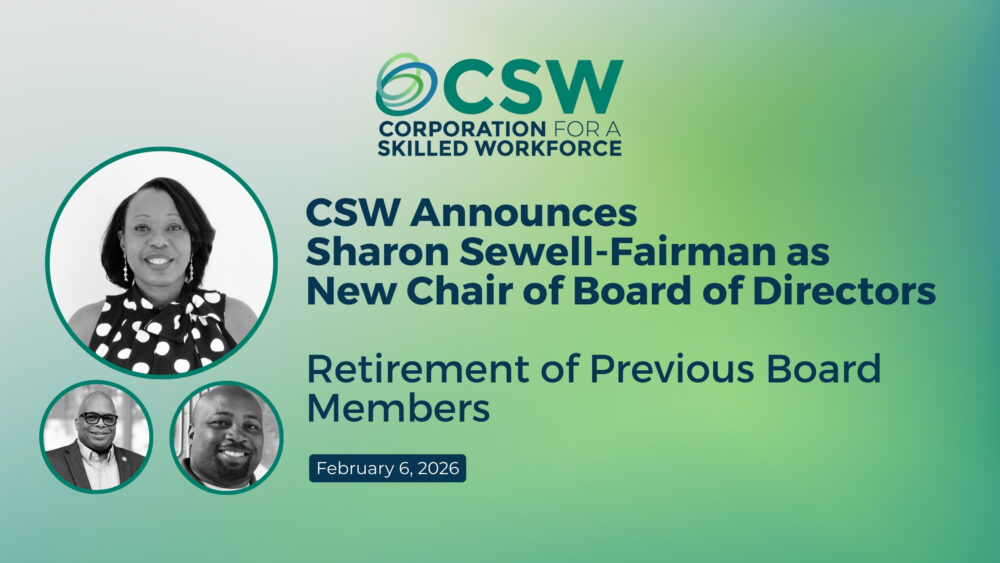
CSW is pleased to announce the new Chair of our Board of Directors, Sharon Sewell-Fairman. Sharon has been a member of CSW’s Board since 2023, providing support to the Strategy Committee. She has over 25 years of workforce and economic development experience and currently serves as President & CEO... read more →
Feb
04
Massachusetts, February 4, 2026: Corporation for a Skilled Workforce (CSW) is partnering with the MassHire Department of Career Services (MDCS) and the Massachusetts Workforce Association (MWA) to provide training and coaching to the MassHire workforce development system through the Trauma-Informed and Resilient Massachusetts (T&R MA) program which will run from July 1, 2025 to September... read more →
Jan
06
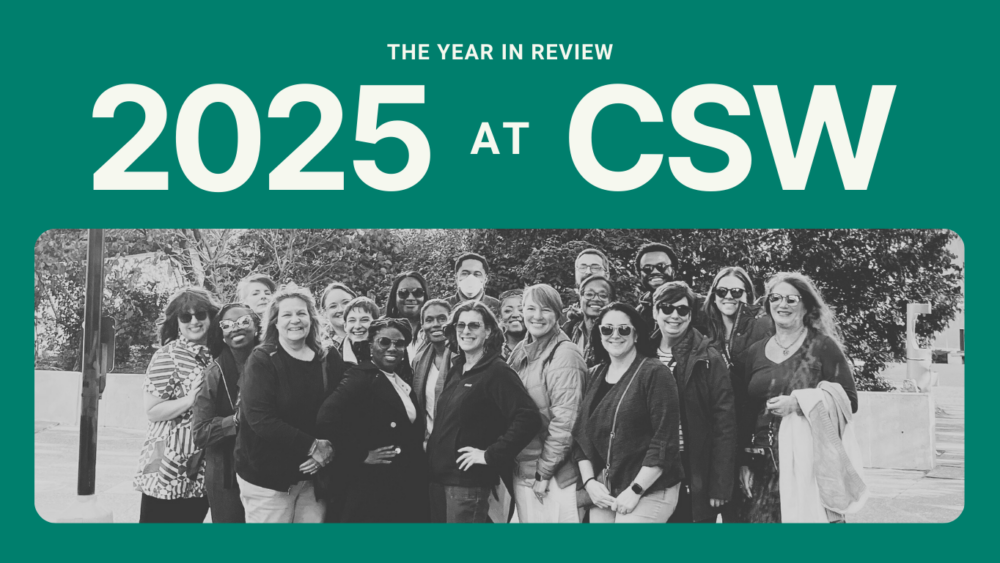
As the new year begins, we want to pause to celebrate CSW’s many accomplishments over the past twelve months. 2025 was fraught with political and funding uncertainty, creating a challenging landscape in workforce development. Yet, CSW continued to grow our staff and managed over 50 unique projects. Over the... read more →
Dec
01
Workplace culture is a major factor in how effective and happy staff are at work. A SHRM study found that 83 percent of employees who described their workplace culture as “good” or “excellent” were motivated to do high-quality work, while only 45 percent felt the same level of motivation... read more →
Nov
19
Preparing young people for the jobs of the future is a complex task, even without the addition of AI tools. The question on everyone’s mind right now is: “Will AI cause unemployment?” While nobody knows for certain, experts continue to develop educated guesses about what the impacts of AI... read more →
Nov
17
Artificial Intelligence (AI) is changing how America works, learns, and competes. It influences everything from advanced manufacturing and logistics, to healthcare, education, and creative industries. The pace of this transformation is extraordinary; AI use in the workplace has jumped from 8% to 35% in just one year. Yet, more... read more →