
CSW’s Trauma and Resilience at Work team partners with organizations to build workplaces that are trauma-informed, stress-reducing, culturally responsive, and resilience-building. We help reduce the stigma around trauma and mental health, provide education across all organizational levels, and promote policies and practices that support sustainable mental well-being at work. Our strategies help organizations build environments that reduce stress, support retention, and improve long-term employee and organizational success. We prioritize collective care and resilience building, especially in the workplace, from public agencies to private companies to nonprofit organizations.
Who We Work With
We work with agencies and organizations in workforce development, human services, adult and postsecondary education, nonprofit employment and training, and related sectors, and well as private-sector employers. We do this work in the context of advancing worker success, racial equity and inclusion, job quality, economic mobility, and fair and safe workplaces.
How We Do It
- Trauma-Informed Workforce Strategy
- Toxic Stress, Conflict, and Burnout Reduction
- Organizational Resilience-Building
- Secondary & Vicarious Trauma Prevention
- Trauma-Informed Leadership Development
- Mentally Healthy Workplace Culture Support
Join us in cultivating trauma-informed & resilient workplaces:
How We’re Making Change
Trauma-Informed Workforce Strategy
Through collaboration with partners and clients, strategies are developed to advance trauma-informed and resilience-building approaches across workforce development, human services, adult and postsecondary education, nonprofit employment and training, and related sectors.
Toxic Stress, Conflict, and Burnout Reduction
Building healthier and more resilient organizations begins with training and coaching at all levels to address stress, staff burnout, and interpersonal tension and conflict. Participants learn practical tools to improve resilience, foster healthier teams, and enhance overall performance.
Organizational Resilience-Building
Our team advances a framework that integrates resilience-building at three levels: personal, team/organizational, and community. We provide professional development on specific strategies and practices within each domain.
Secondary & Vicarious Trauma Prevention
We train staff who may absorb trauma from their workforce development clients, students, and program participants on how it can affect them and how to protect themselves from mental health harm. We provide tools and resources on self-care and collective care with colleagues.
Trauma-Informed Leadership Development
Leaders receive coaching and training on how to adopt trauma-informed practices in managing staff, holding them accountable, and leading teams. We share strategies and tools on building collective care and resiliency skills.
Mentally Healthy Workplace Culture Support
Teams receive support with action planning, working to create more mentally healthy workplaces that improve employee morale, satisfaction, engagement, and productivity.
81% of workers reported that they will be looking for workplaces that support mental health in the future.
Is your organization offering the support your staff need? 84% of survey respondents said their workplace conditions had contributed to at least one mental health challenge.
Work With Us
Featured Case Study: Detroit at Work
CSW has provided trauma and resilience training and organizational coaching for the Detroit at Work public workforce development system since May 2021. In the first three years, CSW staff and consultants provided training and coaching. We also cultivated and supported a group of about 30 “Ambassadors” across the system of nine career centers to sustain and deepen the trauma-informed work in their centers between trainings.
Data from last year’s survey report showed that staff had significantly higher compassion satisfaction (pleasure and satisfaction from helping others) from the second year to the third year. There was a 10 percent increase in high compassion satisfaction (compared to moderate and low), from 51.2 percent in 2023 to 61.5% in 2024. Job burnout remained low at around 64 to 65 percent.
Over the last three years, there have been consistent and sometimes significant increases on measures including:
- More staff said their organization takes time to address the impact of traumatic stress at work in 2024 vs. 2021
- More staff felt they had the flexibility to respond to traumatic stress experienced by themselves, customers, or colleagues in 2024 vs. 2021
- More staff agreed that recognizing and responding to trauma is an important part of their role in 2024 vs. 2021
In 2024, 77.3 percent agreed or strongly agreed that CSW’s T&R training sessions were useful and have used what they have learned in their professional work. When asked about organizational changes, 59.1 percent stated that there have been improvements in trauma-informed practices and resilience building. A total of 81.9 percent indicated that they agree or strongly agree that they would recommend the training they have received to others.
In 2025, CSW is building from this foundation and implementing a Train-the-Trainer model with Detroit at Work and DESC staff. The CSW T&R team is training the Ambassadors to deliver our core training curricula on Introduction to Trauma and Healing; Collective Trauma and Building Resilience; Vicarious Trauma, Self Care, and Collective Care; and Cultivating Trauma-Informed, Healing-Centered Organizations and Supervision.”
Feedback from training and survey participants includes:
- “I like the labs that are available. I find them to be very helpful in situations of the people we serve. It is nice to get feedback on the different situations and how different centers/coworkers would handle that situation.”
- “I like the outcomes and changes that our Ambassadors have brought about here.”
- “This training was very informational and allowed me an opportunity to reflect on how I manage my day to day engagement with our customers. Sometimes I need to take time and reflect. Use my Affirmations and take a break.”
- “Revisiting all I have learned helps to validate that I am still keeping myself accountable to my participants and co-workers.”
Recent Clients & Selected Work
- Detroit at Work Trauma-Informed and Healing Centered Train-the-Trainer Ambassador Program Detroit Employment Solutions Corporation
- Trauma-Informed and Resilient Somerville Somerville Job Creation and Retention Trust
- Trauma-Informed Ambassador Program State of Michigan NEAR Collaborative
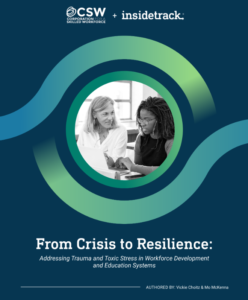
- From Crisis to Resilience: Addressing Trauma and Toxic Stress in Workforce Development and Education Systems CSW and InsideTrack
- Introduction to Culturally Responsive Trauma-Informed and Resilience Building Practices EASTBAYWorks (EBW)
- Strengthening the Substance Use Workforce by Addressing Secondary Trauma through Healing Centered Restorative EngagementNew Hampshire Technical Assistance Center for Substance Use Disorders
- A Trauma-Informed Approach to WorkforceNational Fund for Workforce Solutions
- Trauma-informed Training and Resilience-building with the Workforce SystemNational Governors Association
- Workplace Mental Health WorkgroupMichigan Department of Labor and Economic Opportunity
Featured Reports & Publications
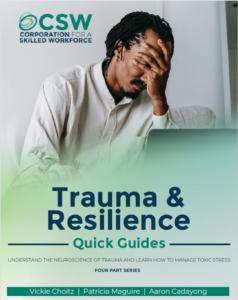

Workplace Mental Health
CSW & Michigan Department of Labor and Economic Opportunity
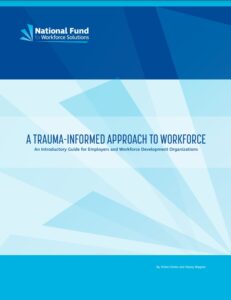
A Trauma-Informed Approach to Workforce
CSW & National Fund for Workforce Solutions
Recent Posts on Trauma & Resilience
Cultivating More Effective Teams Through Trauma-Informed Leadership
Leading people has never been more complex. Today’s managers are balancing staffing shortages, burnout, economic... read more →
October 14, 2026
Beyond Burnout: Moral Injury in Workforce Development
Note: This blog discusses difficult topics including suicide, depression, and homelessness, among others. Reader discretion is advised. A 2023... read more →
September 16, 2026
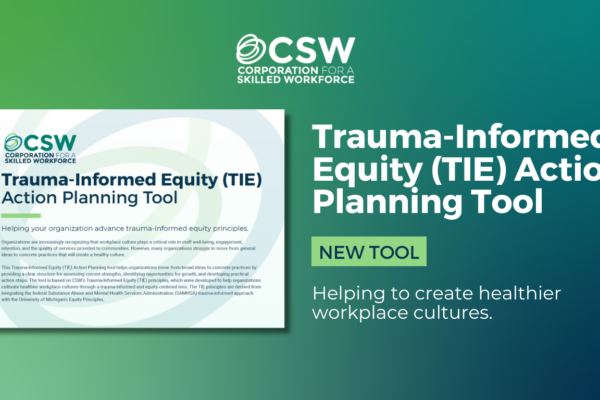
A Trauma-Informed Action Planning Tool for Improving Workplace Culture
Organizations increasingly recognize the importance of creating workplace cultures where... read more →
July 21, 2026
CSW Announces Trauma-Informed and Resilient Massachusetts (T&R MA)
Massachusetts, February 4, 2026: Corporation for a Skilled Workforce (CSW) is partnering with the MassHire Department of Career Services (MDCS) and... read more →
February 4, 2026
How to Improve Workplace Culture and Increase Psychological Safety at Work
Workplace culture is a major factor in how effective and happy staff are at work. A SHRM study found... read more →
December 1, 2025
Vicarious Trauma at Work: What it Is and How to Manage it
When I began my career as a social worker, discussions about any type of trauma were rare. At that... read more →
September 22, 2025
Healing from Community Violence: Resources & Suggestions
Due to ongoing community violence, we would like to reshare our blog: How to Promote Workplace Healing and Resilience Following Community Violence. In addition, we want to highlight the below three strategies to aid in the healing.
- Hold space in all staff meetings to acknowledge current events and allow staff to process.
- Consider establishing a standing grief circle to provide emotional support to staff.
- Work to create an overall workplace culture that is trauma-informed and resilience-building.
Practical resources for conducting grief and healing circles are:
- Basic Guidelines for Calling a Circle from the Circle Way: an informative two-page guide for calling and facilitating a circle.
- Virtual Grief Circles: A Hosting Guide from the Circle Way: an in-depth guide to hosting virtual grief circles from how to invite folks and prepare as the host; the agenda and flow of the session itself; and how to follow up afterwards.
- SAMHSA Disaster Distress Helpline: call or text 1-800-985-5990 for crisis counseling and support to people experiencing emotional distress related to natural or human-caused disasters. Available 24/7, 365 days a year.
- Grief and Healing Circles Script: provides an agenda template for use as a crisis intervention as a first step in hopefully subsequent circles.
- Trauma-Informed Restorative Practices: defines trauma; lists potential causes of trauma and trauma stress responses/symptoms; and includes guiding questions and tips for facilitating.
- How to talk as a classroom about gun violence in schools: provides specific steps, activities, and examples using real-life school shooting incidents.
Meet the Trauma & Resilience at Work Team:

Vickie Choitz
Director of Trauma & Resilience at Work

Patricia Maguire
Senior Policy Associate

Denean Pillar-Jackson
Senior Policy Associate

Aaron Cadayong
Senior Project Fellow
Support improvements in worker skills, lifelong learning, and job quality: