
Colleges often define student success by commonly used metrics like grades, attendance, and retention, as well as metrics associated with their strategic planning, without considering how students themselves define their success in college. This creates a need for colleges to more regularly incorporate student voice in defining success metrics and outcomes. CSW’s Learner-Centered Benchmarking Project (LCBP), with funding from the Annie E. Casey Foundation, partnered with Kennedy-King College to explore how Youth Participatory Action Research (YPAR) could move student voice from consultation to leadership by training students to investigate different perspectives on “success” as a college student and explore how the resulting data could help colleges better align their supports with student priorities.
As a part of the work, Kennedy-King Student Researchers participated in and attended conference presentations, providing the opportunity to share their experiences and findings of their research. Student researcher Jalarion Little shares his experience at the National Career Pathways Conference in New Orleans, LA in February of this year. You can learn more about the Learner-Centered Benchmarking Project during the upcoming SHIFT Conference Session, September 23.
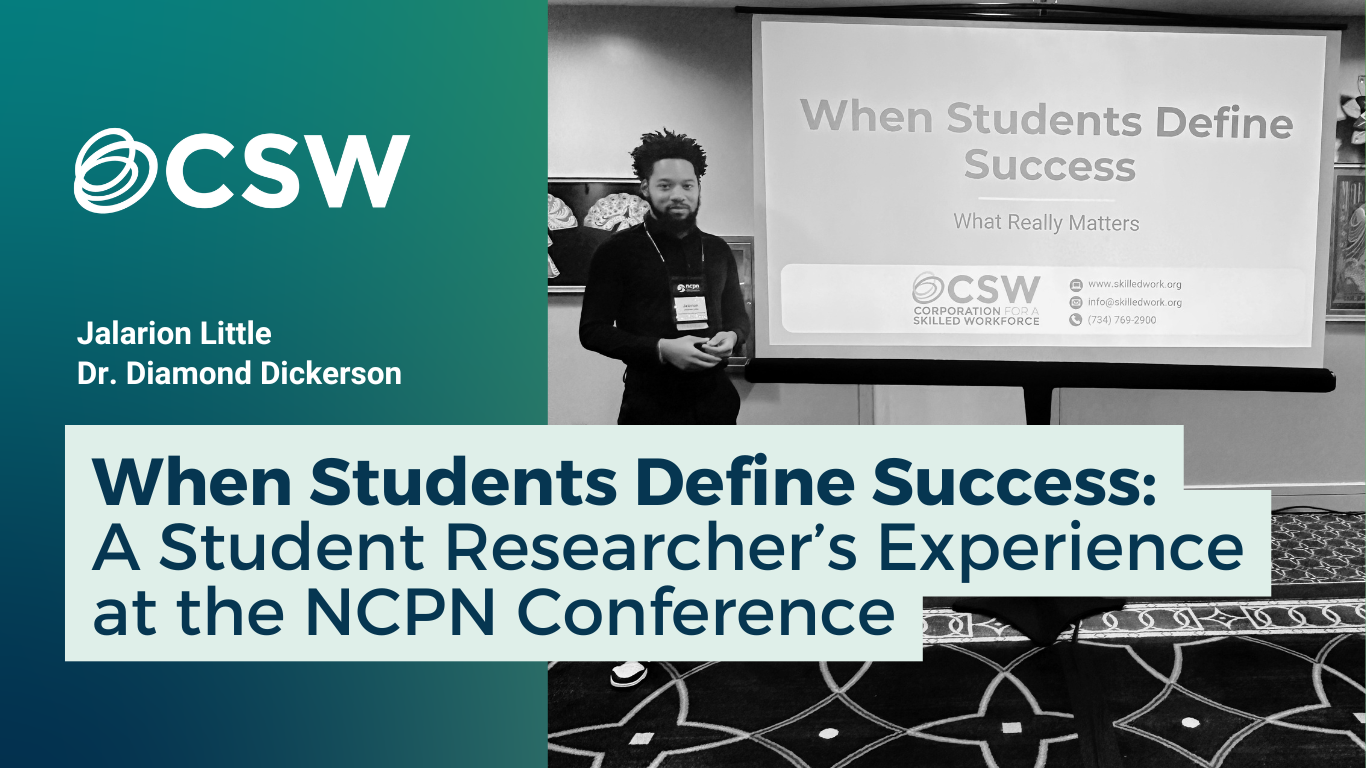
Presenting the Learner-Centered Benchmarking Project at NCPN
Traveling to New Orleans for the NCPN conference was more than just a trip; it was an opportunity to step into a professional space as a student and share real research. As a student researcher, I had the chance to present ideas about student success and advising, which is something I had never experienced before. During my internship at Kennedy-King College, I supported research investigating how effective advisors impact student success, and how guidance and support can shape a student’s academic journey.
The Learner-Centered Benchmarking Project (LCBP) focuses on how colleges can improve student success by understanding what students actually need to succeed. It highlights the importance of strong advising, support systems, and student experiences in shaping better outcomes. This project helped guide the research I conducted during my internship. Being able to attend the NCPN conference and share my experiences on the LCBP was exciting and meaningful, as was the opportunity to speak in front of professionals about why student voices matter when discussing education and success.
This experience also gave me the chance to step outside of my normal routine as a student. Most of the time, students focus only on classes, assignments, and exams. Traveling to New Orleans for the conference showed me another side of college that I had not thought about before. I was able to see how research, conferences, and collaboration between organizations help shape the future of education. Being surrounded by professionals who care about student success made me realize that there are many people working behind the scenes to improve opportunities for students like me.
The Role of Advisors in the Classroom
One of the main topics discussed during the conference was student success and the role advisors play in helping students reach their goals. Many students face challenges while in college, such as balancing school with work, not knowing what career path they want, and not fully understanding the resources available to them.
Our research for the LCBP focused on how advisors support students at Kennedy-King College. Staff members described a system where students are assigned to advisors who help guide them through their academic journey. Advisors then help students choose classes, think about career goals, and stay on track toward completing their respective programs.
However, my personal experience has been a little different as I was enrolled in certificate programs at Dawson Technical Institute; I only had one or two meetings with an advisor. Most of the time, the advisor would come into the classroom and give information to the entire class rather than meeting individually with students.
This experience made me realize that student success is not the same for everyone. Even when systems like student advising are in place, they do not always reach students in the same way. Some students may receive consistent guidance, while others may have limited interaction with advisors. This difference can impact how prepared students feel when making decisions about their education and careers. Because of this, it is important for colleges to not only offer support systems but also ensure those systems are accessible and effective for all types of students.
At the NCPN conference, Dr. Diamond Dickerson and I presented how advising and support services help students move toward career and financial success. Kennedy-King College also offers resources like financial literacy workshops, mock interviews, and career preparation tools. I have personally attended some of these workshops and found them helpful. Experiences like mock interviews and career preparation can help students feel more confident when entering the workforce.
The Value of Incorporating Learner Voice
Incorporating learner voice into research provides insight that data alone cannot capture. While colleges may track completion rates or advising participation, those numbers do not always reflect how students actually experience those systems. By including student perspectives, colleges can better understand gaps in support and identify areas that need improvement. This not only helps current students but also improves the experience for future students who rely on these same systems. If colleges better understand what students need from advising and support services, they can improve those systems for the next group of students coming in.
Personally, this experience showed me that student perspectives are important when studying education systems. Students are the ones experiencing these programs every day, so their feedback can help schools improve their services. This experience helped me realize that my voice as a student actually matters when schools are trying to improve programs and support services.
Presenting at the conference was one of the most impactful parts of my work with the LCBP. Speaking in front of professionals pushed me outside of my comfort zone and challenged me to communicate my ideas clearly and confidently. At first, it felt a little intimidating. But as I continued speaking, I realized that people were genuinely interested in what I had to say. Hearing the feedback from the audience made me feel proud of the work we had done. It helped me understand that students bring valuable perspectives to conversations about education. It also showed me that my experiences are not just personal, they can contribute to larger discussions about improving systems for others.
Continuing the Work of the Learner-Centered Benchmarking Project
The next step of the LCBP is continuing the research and building on what we learned during the first phase. Student researchers are now working on improving the interview questions so we can learn even more about advising and student success.
The conference made me think more about my own future and how I want to continue growing as a student and professional. Experiences like this show how important it is to take opportunities when they come. Traveling, presenting research, and connecting with new people all helped me see possibilities that I might not have considered before. It reminded me that learning does not only happen inside the classroom; sometimes the most meaningful lessons come from real-world experiences like this one.
I would like to thank Diamond Dickerson, Chris Shannon, and everyone at the Corporation for a Skilled Workforce for giving me the opportunity to attend the conference and speak about my experience as a student researcher. I also want to thank my fellow classmates—Justin, Dominic, Nykila, Quention, and Precious—for working together on the research project. Finally, I want to thank my family for supporting and encouraging me throughout this experience.
Comments are closed.