
Across the country, workforce development organizations are hearing a message from young adults that is remarkably consistent—and increasingly difficult to ignore. Young people want work that offers flexibility. They want autonomy. They want purpose. They want room to grow. And for many, that vision of “good work” is harder to access through traditional entry-level jobs, which often demand longer training timelines and significant upfront investment to overcome employment barriers, with no guarantee of a job at the end.
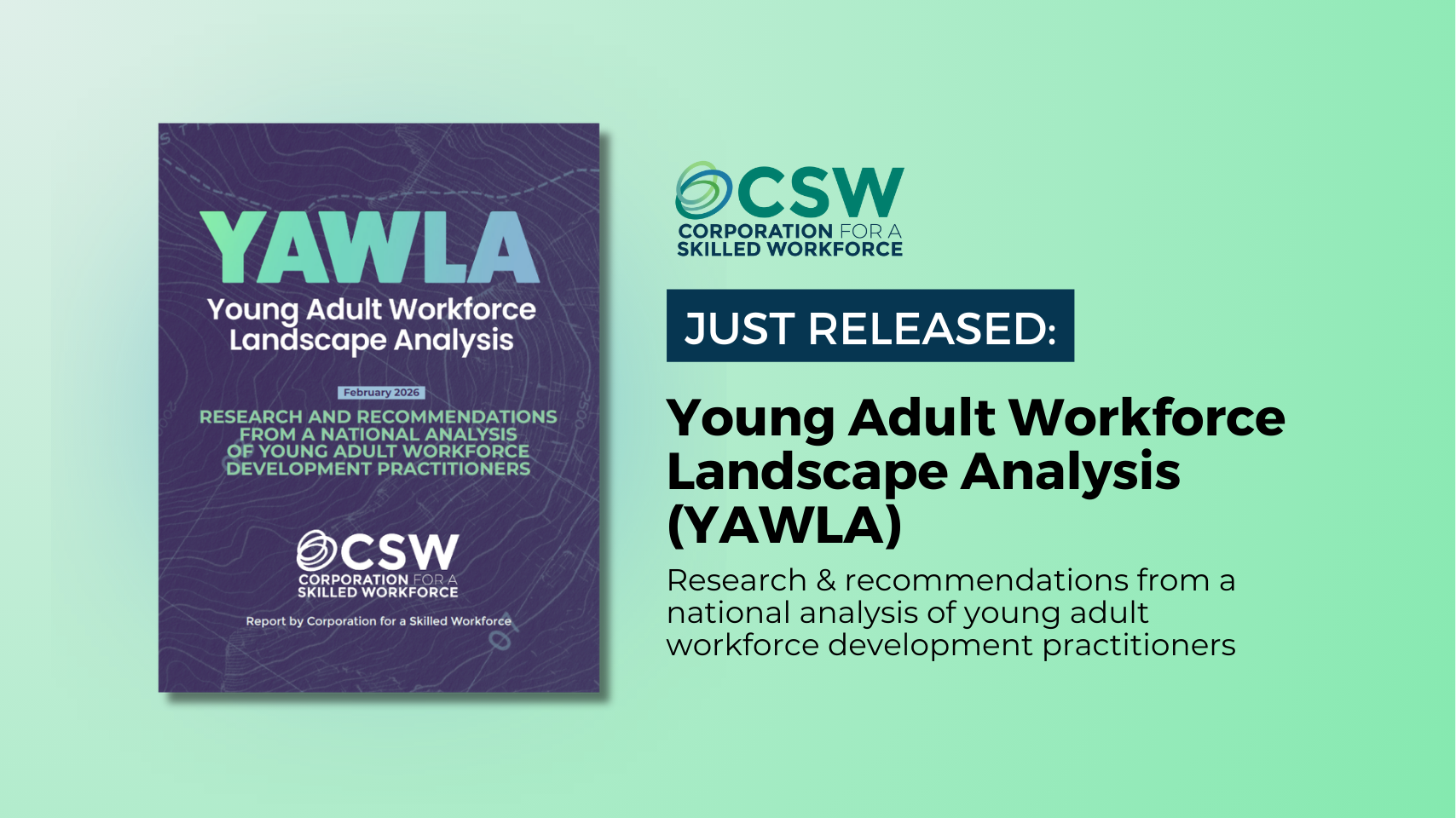
This growing disconnect isn’t anecdotal, nor is it limited to one region or population. Findings from the Young Adult Workforce Landscape Analysis (YAWLA), a national study led by the Corporation for a Skilled Workforce (CSW) suggest something deeper is underway. This isn’t a fleeting preference or a post-pandemic blip. It’s a structural shift in how young adults understand work—and how workforce systems must respond.
Drawing on a national survey of 207 organizations across 44 states and Washington, D.C., and 20 focus groups involving 86 practitioners with workforce practitioners serving young adults ages 18–29, YAWLA offers a rare glimpse into how workforce practitioners are adapting to this moment, where they are succeeding, and where system-level constraints are holding the field back. What emerges is a picture of a field in transition—one that is innovating rapidly on the ground, even as policy, funding, and accountability frameworks lag.
Young Adults Are Shifting From “Any Job” to “Work That Fits”
For decades, workforce systems have relied on a stable set of assumptions: success means securing a job, where entry-level work serves as a steppingstone, and upward mobility follows when individuals work hard and stay the course. The YAWLA findings suggest that these assumptions are evolving and may not fully reflect the realities young adults face today or the ways they make decisions about work and career pathways.
Across focus groups, nonprofits serving young adults consistently reported that young adults are less focused on specific industries and more focused on how work fits into their lives. Flexibility, mental health, autonomy, and alignment with personal values often outweigh traditional markers of job quality, especially when many of the entry-level positions available to them, particularly in retail and hospitality, offer little flexibility, few advancement opportunities, and schedules that conflict with personal or family needs.
For many young adults—particularly those experiencing housing instability, caregiving responsibilities, justice involvement, or interrupted education—traditional employment pathways are fragile. A single setback can undo months of progress. Practitioners also shared anecdotal evidence of a broader trend: a softening labor market is hitting young workers hardest, pushing unemployment among young people to its highest level since the pandemic. At the same time, freelance work and self-employment have become visible, attainable ways to generate income. In this context, it is not surprising that gig work, self-employment, and entrepreneurial pathways are increasingly appealing to young adults.
Young Adults Want to Pursue Entrepreneurship
Perhaps the most striking finding from YAWLA is the scale and consistency of interest in entrepreneurship. Both survey responses and focus group discussions point to a substantial rise in young adults seeking entrepreneurial skills, training, and support. In response, organizations are increasingly recognizing entrepreneurship not as a niche option, but as a legitimate workforce pathway, particularly within today’s gig-based economy.
In many cases, programs frame entrepreneurship as part of a hybrid pathway, where young adults secure employment for stability while building a business over time. This approach allows programs to meet funder requirements while honoring young adults’ long-term goals. At the same time, YAWLA surfaces real tensions. Entrepreneurship-focused pathways often fall outside prescriptive funding models, making them harder to sustain, even when demand is clear and outcomes are promising.
How Practitioners Are Adapting
One of the most important insights from YAWLA is that a growing subset of workforce organizations are responding to these shifts, rather than ignoring them. Survey and focus group data show organizations becoming more intentional about building entrepreneurial skill sets, recognizing their value as transferable skills. They shared with us how they are:
- Leaning into transferable skills inherent in their training programs that nurture entrepreneurship such as communication, professionalism, teamwork, and adaptability;
- Expanding foundational work-readiness curricula to include budgeting and financial planning, marketing and branding, business fundamentals; or customer engagement; and
- Creating more entrepreneurial events, trainings, and pathways within their organizations, including microenterprises and social enterprises.
These adaptations signal a critical shift in how the workforce field understands readiness and success for young adults. As traditional entry-level jobs offer less stability, flexibility, and opportunity for advancement, entrepreneurial and transferable skills are becoming essential—not optional—for navigating today’s labor market. By embedding these skills into training, practitioners are equipping young adults to succeed across multiple work arrangements, including wage employment, gig work, and self-employment.
Just as importantly, this evolution shows that workforce organizations are responding pragmatically to young adults’ lived realities rather than forcing participants into outdated pathways. Programs that emphasize adaptability, financial literacy, communication, and problem-solving are better aligned with employer expectations as well as with young adults’ desires for autonomy, purpose, and resilience. These approaches also position organizations to remain relevant as labor market conditions continue to shift, ensuring that workforce systems support not only job placement, but long-term economic mobility and self-determination.
The full YAWLA research report is essential reading for anyone committed to building workforce systems that truly work for young adults. It goes beyond surface-level trends to show where programs are adapting, where systems are falling behind, and where targeted investments and policy changes can unlock far greater impact. Whether you are a practitioner looking for validation and practical strategies, a funder seeking evidence to guide more flexible and effective investments, or a policymaker aiming to modernize performance measures and accountability structures, the report provides the insight and direction needed to turn emerging practices into lasting systems change.
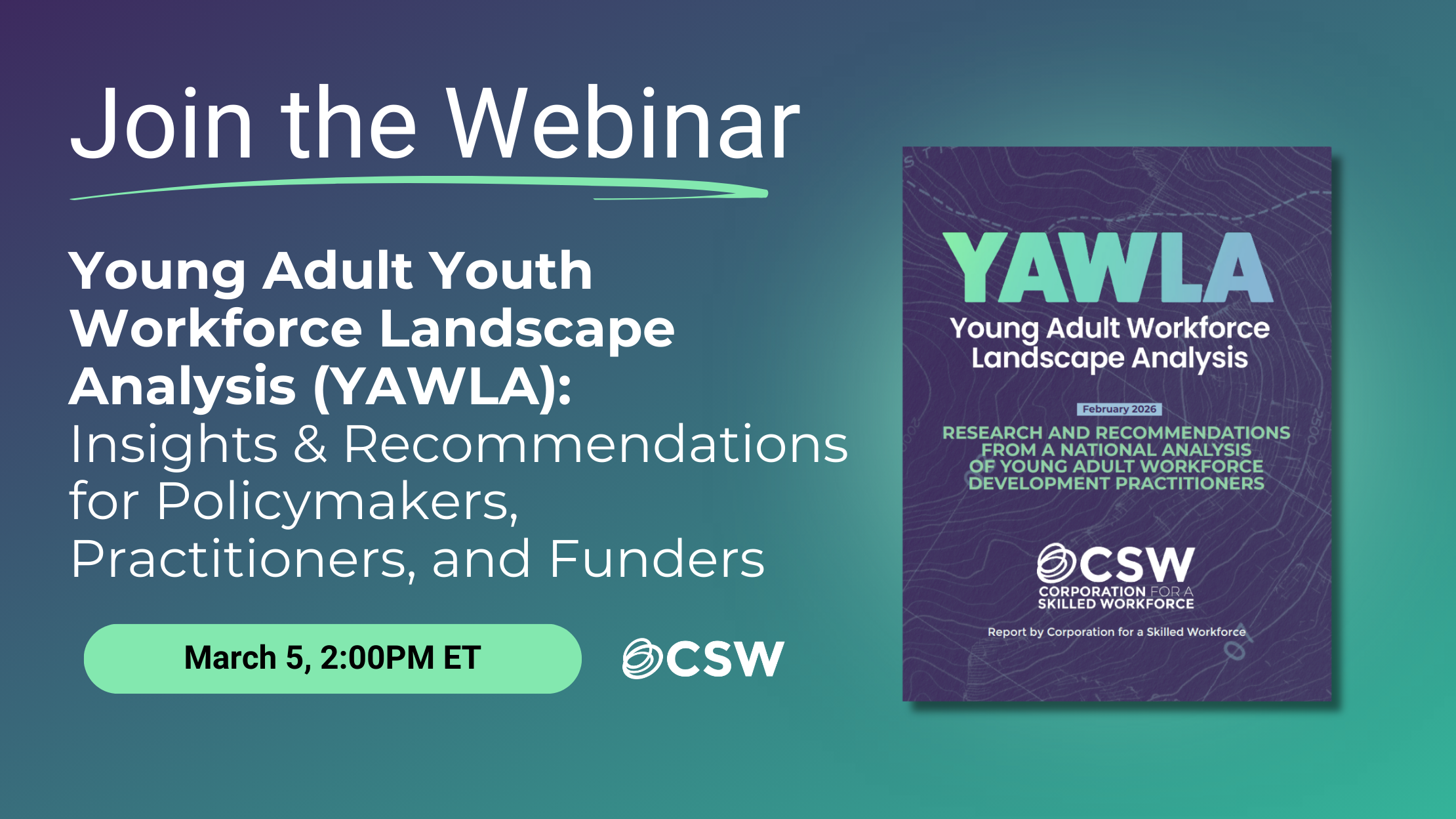
If you’re interested in learning more about the research, join the upcoming YAWLA webinar on March 5 at 2:00 PM ET, which will cover key findings and discuss implications for practice, funding, and policy. This will be an opportunity to connect with peers and reflect on how the findings resonate in your own context. Register here to attend.

Meet the Author
Chris Shannon
Chris is a Senior Policy Associate with CSW’s Improving Practices and Outcomes Team. Chris supports systems change and transformation by developing organizational capacity through learning conversations, data analysis, and promoting shared insights to benefit systems. Continue Reading >>
Comments are closed.