

Detroit’s Untapped Talent: Jobs and On-Ramps Needed
This report is the first of a two-part series detailing the findings from research conducted by CSW. It includes information about the complexities of Detroit’s resident labor pool, Detroit’s industry mix, and the mix of jobs and skills needed for the city to prosper.
Employing Opportunity Youth
Chronic disconnection affects a significant population of young people with far-reaching social and economic costs. These disconnected or “opportunity” youth are defined as 16-24 year olds who are not connected to school or work, and who have one or more barriers to entry into both. These young people are in very serious danger of being left behind permanently, often facing long-term unemployment, low or no income, and/or incarceration. The consequences of not helping these young people succeed are immediate, pressing, and will continue to reverberate both socially and economically until critical steps are taken to increase reconnection and sustainable employment.
Upskill/Backfill Strategies: Advancing Incumbent Workers and Opening Opportunities for Job Seekers
In response to difficult economic conditions during the 2007-2009 recession, the U.S. Department of Labor funded ARRA grantees focused on training unemployed and dislocated workers in emerging and growing sectors to advance incumbent workers and open entry-level positions for unemployed job seekers. This approach is known as upskill/backfill. This report summarizes key lessons learned and documents benefits. These include job seekers benefiting from an increase in capacity of a company’s operations and ability to hire; employers benefiting from training that reduced costs by increasing worker productivity and reducing staff turnover; and communities benefiting from the preservation of jobs and the increasing income of newly trained workers.

Advances in Workforce Policy: Insights from the American Recovery and Reinvestment Act Training Grants
In response to difficult economic conditions during the 2007-2009 recession, the U.S. Department of Labor funded 152 grantees across the country to train nearly 200,000 Americans in emerging and growing sectors such as health care and green jobs. This report examines the 50 top-tier ARRA grantees. Against the backdrop of the 2007–2009 recession, some grantees had difficulty achieving their goals, but many found ways to adapt to the changing economic environment and meet their targets for placing newly trained individuals in jobs.
Call for a National Conversation on Creating a Competency-Based Credentialing Ecosystem
CSW and the other signatories of the Call for a National Conversation on Creating a Competency-Based Credentialing Ecosystem believe that the time has come for large scale expansion of the use of credentials that recognize an individual’s competencies – regardless of means of acquisition – to improve employer competitiveness, reduce skill shortages, expand career advancement opportunities for workers, reduce time to credential for workers and students, and improve returns of accredited credentialing systems relative to costs…
Competency-Based Credentials Case Studies
Corporation for a Skilled Workforce (CSW) has embarked on a multi-year initiative to increase the quality and use of competency-based credentials. To lay a foundation for this work, we gathered information about a cross section of promising credentialing efforts. The case studies that appear in the report provide a glimpse of the variety of approaches being undertaken in different industries—by an array of different stakeholders— both in the U.S. and internationally…
Creating Pathways to Careers in Precision Machining For Opportunity Youth
Our working concept paper, Creating Pathways to Careers in Precision Machining For Opportunity Youth, explores why manufacturers are reporting a skilled worker shortage and how communities can create pathways for youth who are currently not enrolled in classes or working to take advantage of these career opportunities…
Career Navigation in a Volatile Labor Market
Our working concept paper, Career Navigation in a Volatile Labor Market, explores how organizations and communities can build better infrastructures to support workers as they navigate education opportunities…

Making a Market for Competency-Based Credentials
Our new report, Making a Market for Competency-Based Credentials, is aimed at articulating a foundation for our collective work by analyzing the credentialing landscape, identifying promising credentialing approaches, and assessing what is needed to create a clear and compelling credentials marketplace…
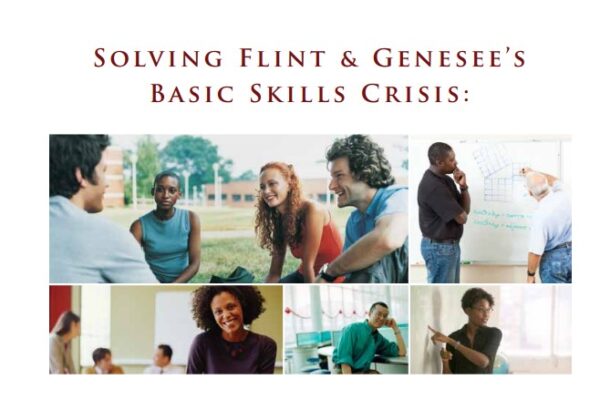
Solving Flint & Genesee’s Basic Skills Crisis
CSW has been working with a network of Flint area stakeholders who are interested in making a difference in the enormous basic skills gaps that are present in their community…
Perspectives on No Worker Left Behind
Transitioning Michigan workers who went back to school with support from the state’s No Worker Left Behind initiative found their training valuable in finding and performing new jobs. This and other No Worker Left Behind participant reflections are detailed in this report, based on survey responses from 4,231 participants in No Worker Left Behind.
Reinventing One-Stop Career Centers Version 2
In our latest concept paper, we propose reinventing and transforming One-Stop Career Centers into places that engage employers willing to invest in upskilling the workforce support workers willing to engage in a combination of work and learning to gain market-relevant skills and credentials to achieve good paying jobs with career potential…